
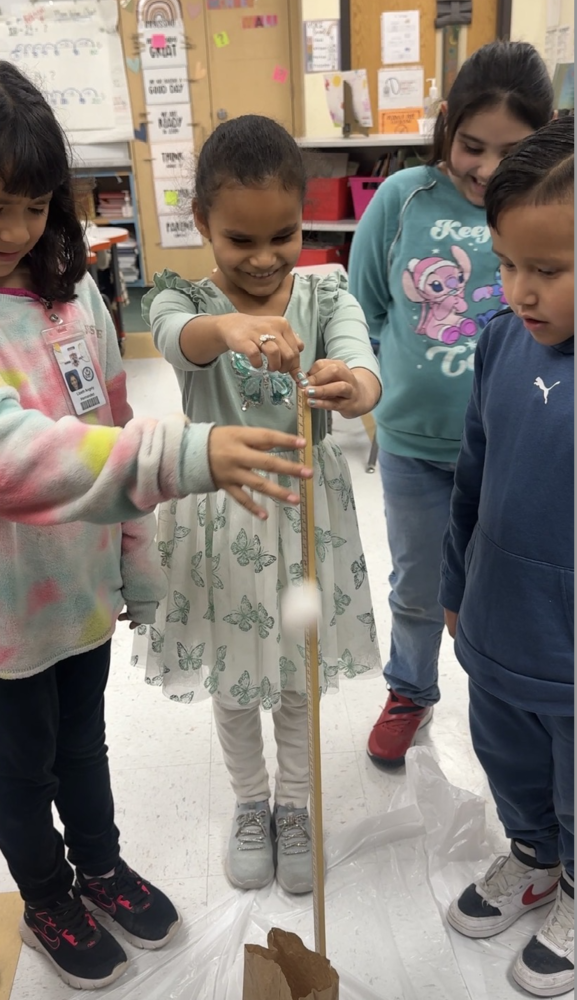
Egg Drop: Learning, Laughter, and Respect for Resources
Overview: After a week of researching, designing, and building, students completed an egg-drop project that combined science, creativity, and environmental responsibility. Some eggs survived the three-foot drop and some cracked, but the goal was learning rather than winning: teams tested hypotheses about cushioning, force, and energy transfer while reflecting on why certain designs worked. Process: Students used recycled and reusable materials—such as paper, plastic bag cardboard, straws, cotton balls and tape or rubber bands.—so they practiced problem solving within constraints and thought about material properties like shock absorption and weight. Reflection: Giggles and excitement filled the drops, but conversations afterward focused on what the data showed, how to improve designs, and how everyday choices affect the natural environment. Takeaway: The unit reinforced scientific skills—research, planning, testing, and revision—while encouraging stewardship: reusing materials reduces waste, and thoughtful design helps protect both fragile eggs and the world around us.